Whether your pet needs dental surgery is decided below the gumline, not by what you can see when you lift a lip. Roughly two thirds of every tooth sits under the gum, so surface staining can hide a dead root and an abscess, while a chip that looks alarming may never have reached the pulp at all. The reverse is also true: a fracture that opens the pulp needs treatment even when the bone around it still looks healthy, because it can take weeks for an X-ray to show the infection. Advanced gum disease, baby teeth that never fell out, and crowded bites hide the same way, and none of them stop a pet from eating, so the signs you are watching for arrive after bone is already lost.
What you want to know is which teeth can actually stay, and whether your pet will come through the anesthesia safely. Those worries are completely normal. Arcata Animal Hospital addresses the anesthesia first, because a safe anesthetic is what makes everything else possible: we start with bloodwork and a full exam, build a protocol matched to the patient in front of us, and assign a trained nurse who does nothing but monitor your pet. At our AAHA-accredited practice, dental care includes full-mouth digital X-rays, so we can tell you what can be saved and what has to come out instead of reading the surface and hoping. If your pet's breath has changed or a tooth looks broken, set up a dental exam so we can find out what is happening under the gumline.
What Decides Whether a Tooth Stays or Goes
- Full-mouth X-rays under anesthesia settle the question, because an exam can only read the part of the tooth sitting above the gum.
- Teeth come out when the bone holding them is gone, a fracture has opened the nerve, a baby tooth never fell out, or a crowded or injured bite is damaging the mouth.
- Pain control is half of oral surgery: a nerve block during the procedure, anti-inflammatories, and a plan for the first days at home.
- Rock-hard chews and thrown sticks cause many of the fractured teeth we see, and brushing plus cleanings on the right schedule prevent much of the rest.
What's Going On Below the Gumline?
Below the gumline, a sticky film called plaque hardens into tartar within days, and the gum inflames where bacteria sit against it. That stage is gingivitis, and it still reverses with treatment. Left alone, the infection destroys the ligament and bone anchoring the root, so a tooth can loosen before the mouth looks bad, and that bone doesn't grow back. That is why dental care matters well beyond the stain you can see.
Families notice the small stuff first: a dog who chews only on the right side, a cat who licks the gravy off the wet food and leaves the rest, a pet who pulls away when you touch their muzzle. Those changes are easy to write off as age. Preventive exams catch the disease at the gingivitis stage, and a cleaning under anesthesia stops it before anything has to come out.
When Does a Tooth Need to Come Out?
A tooth comes out when it can't be saved or can't be kept clean: most of the bone around the root is gone, a fracture has opened the nerve, a baby tooth is crowding its adult replacement, or an injured or badly aligned bite is wearing down tissue.
| What we find | What families notice at home | Usual treatment |
| Advanced gum disease | Bad breath, a tooth that wiggles, blood on a chew toy | Extraction, since the bone that held the root is gone |
| Tooth root abscess | Swelling below one eye or along the jaw, sometimes a draining spot on the face | Extraction and drainage, with antibiotics as support rather than the fix |
| Fractured tooth with the pulp open | Broken crown with a pink or dark center, chewing on one side | Extraction or root canal therapy |
| Retained baby tooth | Two canines side by side in a puppy or kitten | Remove the baby tooth before the bite sets |
| Jaw fracture or a severe bite problem | Reluctance to chew, a mouth that doesn't close right, sores on the palate | Stabilization, selected extractions, or shortening a tooth that's hitting tissue |
A fracture into the pulp chamber opens a direct path for bacteria to the root and the bone around it, so treating fractured teeth means extraction or root canal therapy, not watching. The chance of saving the pulp in a young adult tooth drops quickly in the days after the break, so a chipped tooth is a phone call this week. Never reach for ibuprofen or acetaminophen from your own medicine cabinet while you wait, since both are toxic to dogs and cats, and leave a loose tooth alone rather than working it out at home.
A baby canine beside its adult replacement traps hair and food against the gum and pushes the permanent tooth out of line, so removing the baby tooth at the right age prevents a bite problem that would otherwise be permanent.
Sorting the savable teeth from the rest is the point of dental evaluation and treatment under anesthesia: we chart each tooth, measure the pocket around it, and X-ray the roots before anything comes out.
What If My Puppy or Kitten's Bite Looks Wrong?
Many young mouths look crooked for a few months and settle on their own. Extra teeth, missing teeth, and teeth that erupt in the wrong place all count as developmental dental abnormalities, and each changes where chewing pressure lands and how easily plaque packs between crowded teeth.
A bite that doesn't line up, called malocclusion, sends one tooth grinding into another or into the palate, and that steady contact wears down crowns, ulcerates soft tissue, and exposes the sensitive dentin underneath. The version we worry about most in puppies is a lower canine angled into the roof of the mouth: it hurts on every bite and won't straighten out.
Pulling a baby tooth early can let the adult one drift into a workable position. A tooth already hitting tissue may need its crown shortened and sealed, or orthodontic movement, which a veterinary dentist handles. We check the bite at every puppy and kitten visit, so a crowded adult set gets caught while there are still options.
Why Do Dental X-Rays Matter If the Teeth Look Fine?
A mouth can look clean and still hold a dead tooth. Abscessed roots, dissolving tooth structure, and fragments left behind by an old extraction all sit under the crowns where an exam can't reach them, which is the whole case for dental X-rays.
In cats, those dissolving spots are called resorptive lesions, and they often start at the root where nothing shows. Infection inside a tooth, called endodontic disease, can kill the pulp while the crown still looks whole. Digital X-rays here also let us look at the jaw itself when the problem might be bone, or a mass, rather than the tooth.
For a complicated jaw fracture or an oral tumor, a CT scan maps bone in three dimensions in a way X-rays can't. For everything else, the images sort teeth into three groups: out today, treat and recheck, or watch and image again at the next cleaning.
What Happens When Dental Surgery Goes Beyond an Extraction?
Beyond routine extractions, oral surgery is about rebuilding function: stabilizing a broken jaw so it heals in alignment, closing defects left by diseased bone, and draining deep infection that medication alone won't reach. The goal is a mouth that works comfortably, not a complete set of teeth.
Bone loss around an upper canine can open a channel between the mouth and the nose, called an oronasal fistula, and it keeps producing nasal discharge and sneezing until a soft tissue flap closes the hole. Jaws break from trauma, such as a fall or a car accident, and also from disease: in a small dog, gum disease can thin the bone around the lower canines until an ordinary jump cracks it.
We handle many routine and complex surgeries here, and once we have seen the X-rays we'll say plainly whether your pet's procedure belongs at our hospital or with a boarded veterinary dentist. For an injury today, call us for urgent care while we're open. After hours or on a Sunday, our after-hours message will direct you to the area hospital covering emergencies that night.
How Do You Keep My Pet Comfortable Through Dental Surgery?
Pain control starts before the first extraction, not after. Comfort rarely comes from one prescription, because the drugs used to relieve pain act at different points: local anesthetic at the nerve, anti-inflammatories in the tissue, and others in the brain and spinal cord. Combining them is called multimodal analgesia, and a nerve block placed before the first incision lowers both the anesthetic needed during the procedure and the soreness that evening.
Our veterinarians and credentialed technicians match the pain plan to the patient: a senior cat whose kidney values limit anti-inflammatories, a flat-faced dog whose airway needs closer watching on waking, a pet already taking other medications at home.
| What to expect at home | When to call us |
| Pink-tinged drool on the first day | Bleeding that keeps going, or restarts after stopping |
| Soft food eaten carefully, head tipped to one side | No interest in food after the first day, or food dropped repeatedly |
| A sleepy, quiet evening | Still flat or hiding two days later |
| Mild lip or cheek swelling | Swelling that grows, feels hot, or weeps |
| Stitches dissolving over a couple of weeks | A gap opening at the surgery site, or a bad smell coming back |
Feed soft food after extractions, and keep hard chews and tug toys out of reach until the recheck, so nothing pulls at the stitches or packs into a site that hasn't closed yet. Give the medications on schedule even on a day your pet seems fine, because staying ahead of soreness takes less medicine than catching up. And a cat who hasn't eaten in 24 hours needs a call, since cats who stop eating can develop a serious liver problem on top of whatever started it.
What Chews and Toys Are Safe for Dogs and Cats?
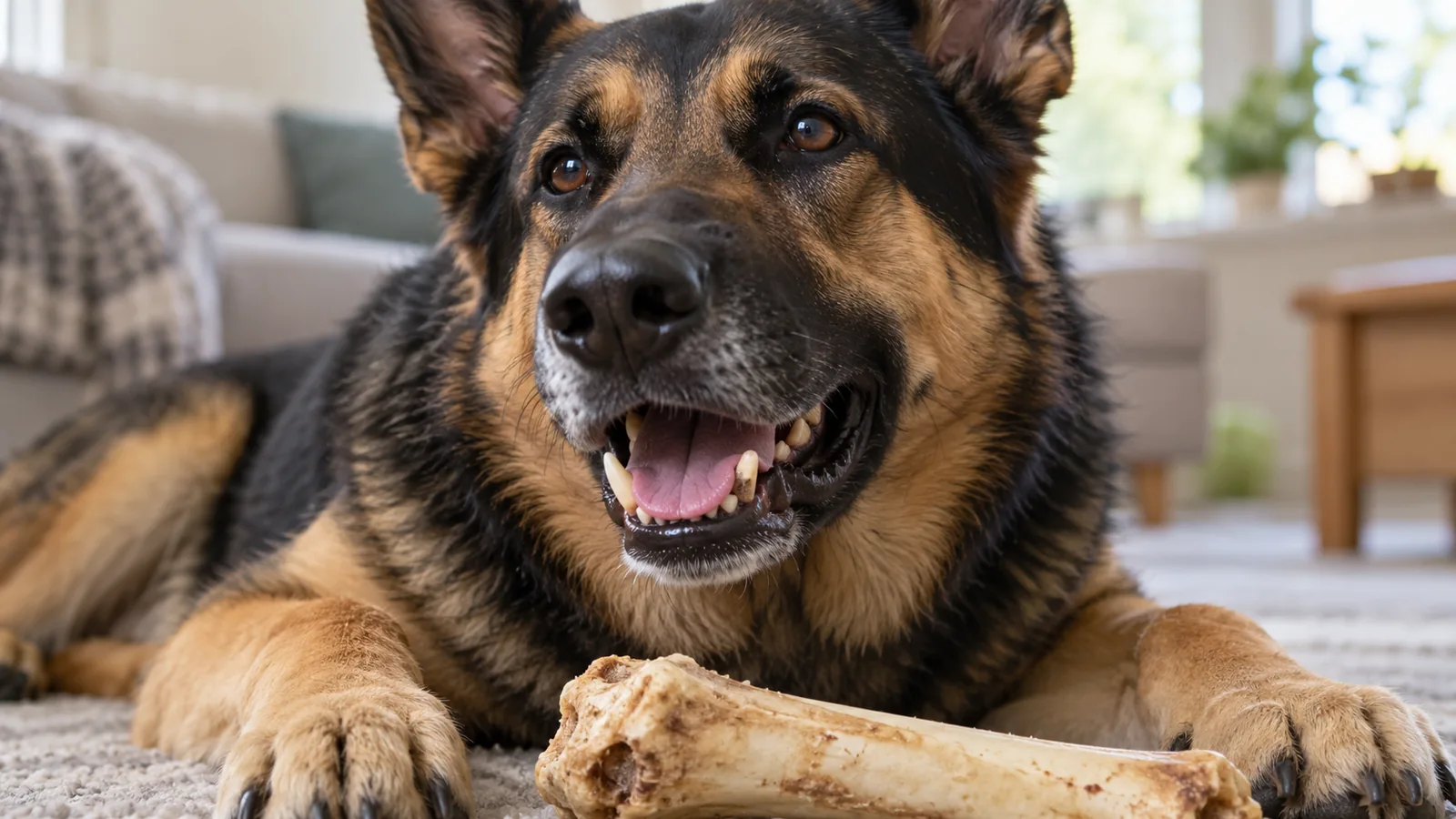
A safe chew bends or dents under your fingers and wears down as your dog works on it. Anything that stays rock hard can be harder than tooth enamel, and that is where the dangers of popular dog chews begin: antlers, hooves, bones, and rigid nylon toys fracture the big upper chewing teeth.
A stick thrown ahead of a running dog on an Arcata beach or trail walk can land point up and spear the tongue, palate, or throat, which is why veterinarians have pushed back on throwing sticks in favor of a ball or a rubber toy.
Cats fracture canines in falls and scuffles more often than on anything they chew, so prevention for cats depends less on what they play with and more on a full look at the mouth under anesthesia.
What Home Care Keeps This From Coming Back?
The best home care is whatever you'll keep doing. VOHC-approved dental products have submitted trial data showing a measurable drop in plaque or tartar, so that seal separates a chew or water additive that works from one with good packaging.
- Brushing: In studies, brushing every other day measurably cut plaque and tartar over several months. Start with a finger and a flavored pet toothpaste, work up to the outside of the back teeth, and quit before either of you gets frustrated.
- Wipes and additives: A dental wipe from our online pharmacy, run along the outer surfaces, gets a good share of the benefit for the cat who will never accept a brush. A water additive asks nothing of your pet, which is why families keep using it.
- Chews and diets: These work by scraping as your pet bites down, so they help the surfaces they touch and nothing else. Count them as a supplement to brushing, not a replacement.
- Professional cleanings: Small and toy breeds fit 42 adult teeth into a jaw built for fewer, so crowding, trapped food, and gum disease arrive years earlier than in a Labrador. Those dogs, and cats with a history of gum inflammation, usually come in more often than a big dog with a wide bite, and we set the interval at wellness exams for every life stage based on what the last cleaning showed.
What We Get Asked Often About Pet Dental Care
Will my pet eat normally after extractions?
Most pets eat better once the painful teeth are gone. Dogs and cats swallow most of their food rather than grinding it the way people do, so dinner doesn't depend on a full set of molars. Pets who lose most or all of their teeth usually switch to canned or softened food and do well, and a surprising number go right back to crunching kibble.
Can a broken tooth be saved instead of pulled?
A broken tooth can sometimes be saved, and how deep the fracture goes decides it. A chip that stops short of the pulp can often be smoothed and sealed in one visit. A tooth with a healthy root and enough structure left may be a candidate for root canal therapy, which removes the infected tissue inside and keeps the tooth. Veterinary dentists perform root canals, and X-rays of the root tell us whether your pet's tooth is worth saving or likely to fail later anyway.
My pet is 13. Is anesthesia too risky for dental work?
Age on its own isn't a disease, and senior pets come through dental surgery safely and routinely. What matters is what else is going on: kidney and liver values, heart function, blood pressure, and how your pet handled anesthesia before. Bloodwork and a full exam come first, and if we hear a murmur we may recommend an echocardiogram before scheduling anything. Leaving an infected mouth alone carries its own risk, and months of dental pain are harder on an older pet than a carefully planned anesthetic.
Book the Exam That Shows What's Under the Gumline
An infected tooth left in place keeps feeding inflammation, and pets who finally have the bad ones removed often perk up faster than their families expect. X-rays of the roots show which teeth are sound and which have to go. If something looks broken, the breath has changed, or it's been a while since the last cleaning, schedule an oral exam at Arcata Animal Hospital and we'll start under the gumline.